
The Wounded Healer - Why Our Pain Becomes Our Path
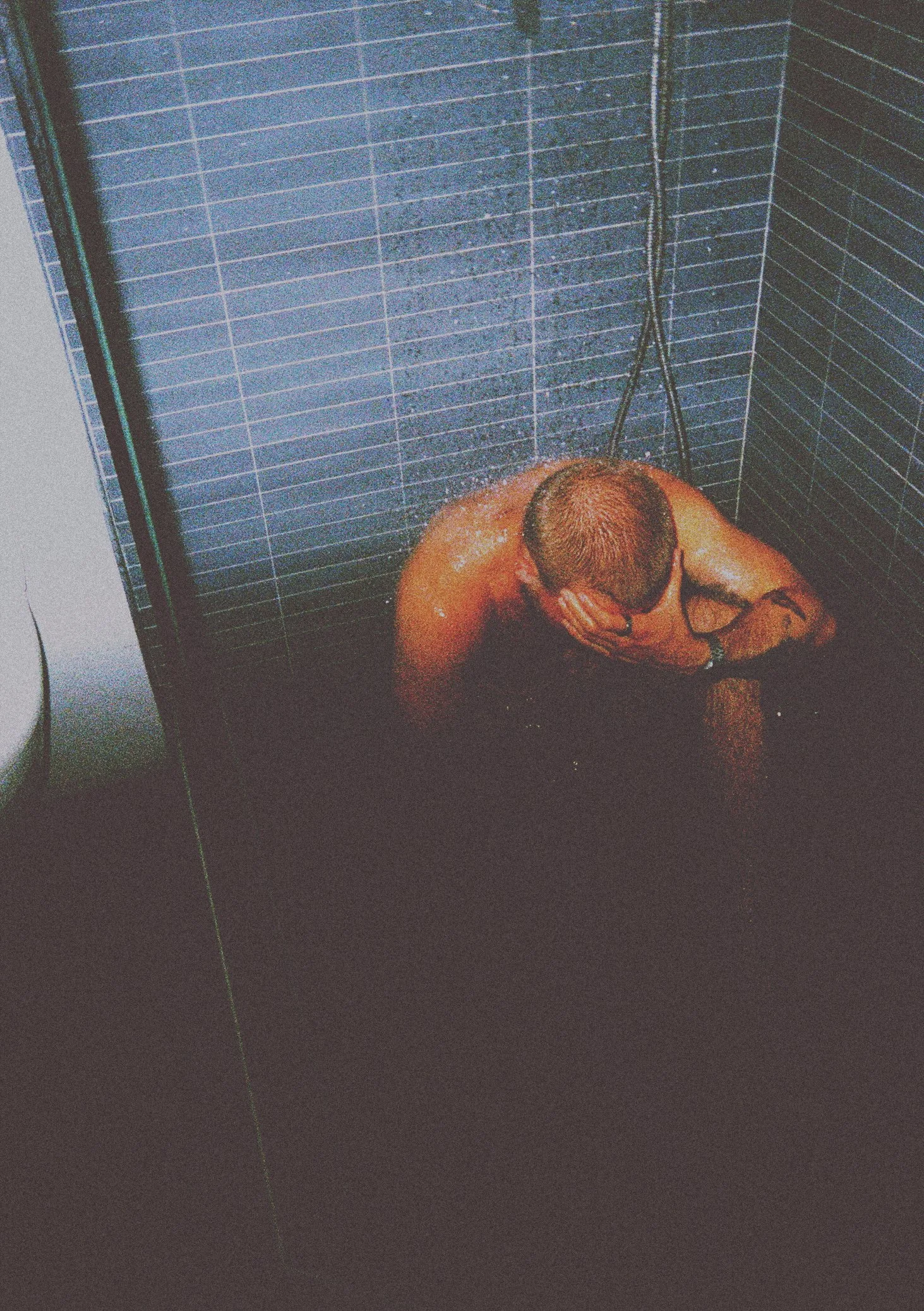
The Wounded Healer - An Opening
There are moments in life when the world you’ve carefully built around yourself begins to crack. Sometimes it’s slow – a quiet slide into exhaustion, numbness, or a creeping sense that something inside is drifting out of alignment. Other times it arrives all at once – a collapse that forces you to face truths you’ve avoided.
For me, it happened twice. Two periods of burnout that sank into depression. Two moments where life demanded that I stop, turn inward, and confront the deeper patterns shaping my behaviour, identity and choices.
At the time, each collapse felt like failure. Only later did I understand that these weren’t just breakdowns – they were initiations. They were the doorway into a completely different relationship with myself and the work I now dedicate my life to.
Psychology has a name for this path: the wounded healer.
Tracing the Wound Backwards
When I started unpicking how these two experiences arose, I had to trace the thread all the way back to childhood – to where my identity, narratives and beliefs began.
Being dyslexic, school was not a place where I thrived, believe it or not. Like many dyslexics, I found my confidence, value and self-worth through movement – through football. And as soon as I found something I loved, my brain did what it always does: it obsessed.
I watched matches on repeat. Studied positioning, patterns, dynamics, movement and psychology. The first books I ever read – at age 15 – weren’t novels, but Soccer Tough by Dan Abrahams and The Optimum Nutrition Bible. Something in me learned early that if I could understand something deeply enough, I could excel at it.
That impulse has never left. Even now, nearly 15 years later I can buy 2–4 books a week without thinking. Understanding is how I navigate the world. It’s the basis of my work. And in many ways, it’s also the root of my suffering.
Because obsession is healthy…until it isn’t.
That same single-mindedness helped me build my first business in 2016. It carried me through a BSc at University while working full-time and interning because the goal – working in sport – mattered more than anything else.
But as I arrived in that world, I felt an inner truth I wasn’t ready to admit: this wasn’t giving me what I wanted.
At the same time, I was deep in London’s music scene – DJing at friends’ parties, immersed in club culture, surrounded by friends who lived and breathed electronic music. Slowly, almost imperceptibly, the idea for Balance began forming: a way to fuse my two worlds and support the people whose lives and struggles I understood so well.
But the truth is: I pushed too hard, for too long.
Self-employment, a career pivot, building a second business while running the first – all of it was fuelled by an identity built on drive, ambition and obsession. My body was asking for stability, rest and safety. My mind was asking for space. But my internal narrative – keep going, keep achieving, keep proving yourself – refused to slow down.
Looking back, I can see how much of that was tied to the masculine mode of motivation I had been operating from my entire life. The part of me that believed progress only comes through force, discipline and unbroken momentum. The part that equates worth with output, and motion with meaning. Ego loves this mode because it feels heroic – the grind, the pursuit, the pushing through.
But masculine energy, when it’s unbalanced, convinces you that you’re always on the right path as long as you’re moving forward. It tells you to push harder, even when the tank is empty. It keeps you locked in linear thinking, even when life is asking for something different.
It often takes a breaking point to realise that this is not resilience – it’s disconnection.
What I eventually learned, and what Carl Jung’s work speaks to so profoundly, is that true growth requires integrating the feminine principle as well: receptivity, intuition, listening, rest, allowing, surrender. A different intelligence of success. A way of creating that doesn’t rely on self-destruction, but on alignment.
The feminine is not passive. It’s perceptive. It’s the part of us that knows when to stop forcing, when to step back, when to let things emerge instead of being chased.
My burnout taught me that obsession can build, but it can also break.
And what rebuilds is something else entirely – a way of working that is sustainable, embodied and wise enough to know when to push and when to pause.
This is the shift that ultimately rerouted my life: learning to balance the masculine drive that got me here with the feminine intelligence that would allow me to continue without losing myself again.
The Wounded Healer Archetype
Carl Jung – one of the most influential psychologists of the 20th century – described archetypes as universal patterns that shape the human psyche. Among the most powerful is the wounded healer: the idea that those who have been wounded, and who learn to understand and integrate that wound, are uniquely positioned to guide others through their own.
The wound becomes the medicine.
The suffering becomes the teacher.
And the healer’s path begins exactly where life once felt most broken.
That is the root of my work.
That is the foundation of Balance.
And that is where this story, and this journal, truly begins.
The Wound Itself - Jung, Chiron and the Descent Into Darkness
When life breaks you open, it doesn’t just disrupt your plans – it dismantles the identity you’ve built around them. Jung believed that every meaningful transformation begins with a wound, a rupture that exposes the unconscious forces we’ve ignored, denied or outrun. He called this an initiation – the moment the Self begins to pull us toward wholeness, often against our will.
In myths across cultures, the wound is never an accident. It is the doorway. The place where the surface cracks and the deeper truth pushes through.
The Greek myth of Chiron, the original wounded healer, captures this perfectly. Chiron was a wise, skilled healer – but when struck by a poisoned arrow he could not heal himself. His wound never closed, and yet that very wound became the source of his ability to heal others. Jung saw this as a psychological truth:
we are most able to guide others in the places where we ourselves have been broken.
The wound becomes the initiation, the descent into the darkness of the psyche. If we resist it, we stay stuck in what Jung called neurotic suffering – the suffering of avoidance, denial, and self-deception. But when we turn toward the wound with curiosity rather than fear, it becomes authentic suffering – the kind that transforms, deepens, rebuilds.
That descent is rarely graceful. It certainly wasn’t for me.
My two periods of burnout and depression weren’t random collapses; they were the psyche forcing a reckoning with the imbalance I had built my life around. On the outside, I was achieving – building businesses, shifting careers, living in alignment with ambition. But beneath the surface lived a wounded child who had learnt to survive through obsession, achievement, and control. A boy who built his worth on performance because school, learning and structure had told him he wasn’t enough.
Jung said that until we make the unconscious conscious, it directs our lives and we call it fate.
My fate was obsession disguised as purpose.
Momentum disguised as meaning.
Discipline disguised as identity.
The wound exposed the truth:
my mind was exhausted, my body was depleted, and my identity was running the show.
Depression didn’t arrive as a dramatic collapse—it seeped in. Quietly dismantling my certainty. Quietly eroding my drive. And yet, at the same time, quietly opening the door into my unconscious.
This is what Jung meant when he wrote:
“The initial shock amounts to a call.”
Not a call to action, but a call to depth. A call to meet the parts of yourself you’ve never had the courage—or the silence—to face.
The wound forced me into that meeting.
It made me confront the shadow side of my masculine drive, the part that believes rest is weakness, slowness is failure, and softness is dangerous. It made me see how I had over-identified with structure, discipline, and achievement—and how desperately I needed the feminine qualities I had neglected: receptivity, intuition, softness, stillness, surrender.
This is what Jung called the work of integration.
The masculine without the feminine becomes brittle.
The feminine without the masculine becomes directionless.
Wholeness requires both.
And in that integration, the wound begins to transform. Not by closing, but by becoming a source of wisdom and service.
The Descent Into Myself - How My Two Burnouts Became Initiations
Looking back, both burnouts followed the same pattern: a slow unraveling disguised as progress. On paper, everything looked upward. In reality, I was slipping further out of alignment with myself.
The first burnout arrived quietly. Subtle signs, fatigue and lost motivation—that I brushed aside as the cost of ambition. I told myself I was just “pushing through,” that this was what it took to build a career, a business, a life on my own terms. But underneath, something deeper was happening: my body was signalling that the identity I’d built couldn’t sustain the pace I was forcing on it.
I didn’t listen.
The second burnout was louder. It brought depression—real, undeniable, and impossible to outrun. The crash wasn’t just emotional; it was existential. It stripped away the stories I’d used to hold myself together. The narrative of being the one who always coped, always performed, always pushed through. Suddenly, I couldn’t push through anything. And that collapse forced me to confront the pattern I’d been repeating since childhood.
This is exactly what Jung meant when he said the wound comes twice.
First as a whisper.
Then as a demand.
My identity had become a suit of armour—built from dyslexia, early insecurity, relentless ambition, and a lifetime of proving myself through work, obsession and achievement. It had taken me far, but it was also suffocating me. Burnout wasn’t just exhaustion; it was the psyche rejecting a way of living that no longer fit.
And here’s the part I didn’t understand at the time:
burnout is not a failure of strength; it is a failure of alignment.
A sign that the life you’re living is out of tune with the life you’re meant to live.
The descent into depression forced me inward. It stripped me back to the essentials. It made me aware of the parts of myself I had abandoned long ago - the intuitive, slower-moving, receptive parts that had no space in the environment I’d built. It brought me face-to-face with the truth that I could not keep living from discipline alone. I had to learn to live from balance.
Both burnouts were initiations - brutal, necessary, clarifying. They broke the identity I had outgrown. They revealed the deeper direction of my life. And they prepared the ground for the work I now do with others: guiding them through their own descents, helping them transform their wounds into wisdom, and supporting them in building a balanced, sustainable life.
The Turning Points - Two Experiences That Shifted Everything
Both burnouts forced me inward, but two experiences actually changed my trajectory.
The first was a festival in Portugal. At the time, I didn’t realise how close I was to collapse - I only knew that for the first time in months, I felt my nervous system soften. Something about the environment, the music, the people, and the space away from my routine allowed me to breathe again. It wasn’t a cure, but it was a glimpse of alignment - a reminder of what it felt like to be connected to myself rather than pushed by momentum. I didn’t recognise it as burnout yet, but the seeds of awareness were planted.
The second turning point was far more profound: a 10-day Vipassana meditation retreat. That experience didn’t just slow me down - it confronted me with myself. Ten days of silence, ten days observing the mind, ten days without escape. What emerged was honesty. I finally saw the depression I had been carrying for nearly a year, the patterns that shaped it, and the cost of the life I had been forcing myself to live.
Vipassana was the initiation I didn’t know I needed. On the surface, I went to deepen my meditation practice for my clients. But on a deeper level, my body was begging for rest - real rest - and my psyche was demanding truth. I finally understood what my burnouts were trying to show me: that I had been living out of alignment with my own needs, and that no amount of discipline or ambition could compensate for that lack of balance.
These two moments - one soft, one severe, marked the beginning of integration. They opened the path toward the work I now do: helping others recognise the early signs of misalignment, navigate their own descents, and rebuild a life rooted in balance rather than burnout.
My Healers - The Practices and People That Held Me
When everything else felt unstable, a handful of anchors helped me understand what I was going through and gave me enough steadiness to keep moving. None of them were quick fixes. They were the slow, honest companions of someone trying to rebuild from the inside out.
Books opened new ways of seeing the world and my place within it. They helped me understand the mind, behaviour, spirituality and the wider systems that shape us. Psychedelics, used with care and intention, gave me moments of clarity and shifted my brain pattern, I could not access through thought alone. They showed me patterns, attachments and truths I had been avoiding.
Nature became a place where I could breathe again. Running did the same. Both reminded me that movement is medicine, and that clarity often comes from rhythm rather than thinking. Community & Music brought me that much needed joy and connection. Conversations, friendships and shared spaces helped me feel less alone in what I was experiencing.
Therapy gave me a structured way to understand my patterns, specifically Internal Family Systems therapy. Meditation gave me the tools to sit with them. Vipassana, especially, helped me see the difference between my thoughts and the awareness observing them. It showed me how much of my suffering came from craving, aversion and the stories I had been carrying since childhood. My girlfriend for the love, support and care.
These practices became my healers. They did not remove the wound, but they helped me understand it. They helped me integrate it. And they helped me recognise that the path I am on now was shaped by everything i’ve experienced. Jung wrote that the light we look for is often hidden inside the wound itself. My healers were how I learned to see it.
How the Wound Became My Purpose
At some point I realised the pain I had been trying to outwork was the same pain shaping the work I was meant to do. Jung believed the wound is not a barrier but an initiation – the place where honesty, humility and genuine wisdom begin. Both of my depressive periods forced me to stop, see myself clearly and understand the patterns that were silently steering my life. When you finally face your own suffering, you start to recognise it more clearly in others. Compassion becomes real.
That shift is what rerouted my path. My experience in sports science, wellbeing, creative culture, behaviour change and meditation began to align with my lived experience of burnout and rebuilding. Supporting people through imbalance, uncertainty and self-doubt stopped being an idea and became something I felt designed to do.
I also stay within the remit of my practice. I’m not a therapist. I offer coaching grounded in behaviour change, sports science and meditation, supported by training in counselling skills and extensive study of Internal Family Systems, embodied cognition and contemplative practice. When needed, I work alongside therapists to support the wider picture.
My work didn’t come from strategy. It came from necessity, from listening to the part of me that broke twice and learning how to rebuild with more awareness, alignment and humanity. The wound taught me how to support others. The healing gave me purpose.
The Wounded Healer Archetype
Carl Jung observed that those who do meaningful healing work are often shaped by their own wounds. He called it the archetype of the “wounded physician” - the idea that our capacity to guide others comes not from perfection but from having navigated darkness ourselves. It isn’t the wound that qualifies you. It’s the way you learn to carry it.
When I first came across Jung’s work, it gave language to something I had been living without realising. The periods of burnout, the depression, the identity crises, the self-inflicted pressure, the constant search for meaning – none of it was random. These were initiations into a deeper understanding of the human psyche and my own patterns. It helped me recognise that the part of me that broke was also the part capable of guiding others through their own fragmentation.
The wounded healer is not someone who has “figured it all out”. It is someone who has walked through the fire, learned its lessons and can now stand beside others as they face their own. Not as a saviour. Not as an authority. As a companion who knows the terrain.
The wound became the doorway into purpose. The breakdowns became my teachers. And the healing – slow, imperfect, ongoing – became the foundation of Balance.
If You’re in the Wound Right Now
Maybe you’re in burnout or depression. Maybe something in your life feels fractured, heavy or directionless. When you’re inside that place, everything narrows. Your world shrinks. It feels like you’ve lost access to the person you used to be. It’s tempting to believe it’s the end of something – your purpose, your stability, your momentum.
But often, it’s the beginning.
The wounded healer archetype reminds us of a deeper truth:
The wound isn’t the blockage. The wound is the doorway.
A fracture in the life you were living forces you into a deeper relationship with yourself. It strips away illusions, confronts you with what’s no longer sustainable, and pushes you toward a more honest way of living. On the other side of that process is the potential to become someone more whole, more awake and more capable of supporting others from a place of integrity.
Bringing It All Together
When I look back, the burnout, depression, obsessive drive and moments of collapse all form one clear arc. What felt like breaking was really a restructuring. The wounded healer isn’t someone untouched by struggle but someone shaped by it, someone who turns their own learning into service.
This is the foundation of my work today. I’m not a therapist. I stay within my remit – coaching, training, meditation, embodiment, Internal Family Systems–informed approaches, counselling skills and the science of health, wellbeing, creativity and performance – I collaborate with therapists when needed. My role is to help people navigate their own transitions with clarity, honesty and grounded support.
If there’s one thing my journey taught me, it’s that our wounds don’t prevent growth. They prepare us for it. And sometimes the cracks aren’t the end, but the point where the light finally starts to come through.